Monday, March 16, 2015

HERRINGBONE OR CHEVRON - DO YOU KNOW THE DIFFERENCE?


White room with chevron wood floors


Something has come to my attention recently that shocked me a little, and I'll explain to you why in a moment.  My favorite Social Media platform is Instagram, and it seems to me that people are very much confused with the Herringbone and Chevron patterns.  I mean, they are posting Chevron when it's actually Herringbone and vice versa.  What "shocked" me the most is just the other day I was going through the feeds on IG and saw a post from a very reputable and well known leader in the interior design industry (which will remain nameless) who had posted an image of a room with Chevron floors and said they were Herringbone.  Many comments quickly followed to correct the error, which in turn led the Instagrammer to edit their post.  I saw the same mistake on a well known blogger's post (again won't mention names), where she did a spread on a Parisian apartment with Chevron wood floors throughout the entire space and said it was Herringbone. I've seen this inaccuracy countless times and wonder, do people even realize there are two different patterns here?

Although the patterns start off very similar, there really is quite a distinction between the two of them...and it all lies at the point where the two blocks meet.  In the Chevron pattern, the blocks run point to point and the ends are cut at an angle to create a continuous zigzag design.  Whereas, in the Herringbone pattern, the blocks finish perpendicular to each other, resulting in a broken zigzag.  The difference is the blocks match up symmetrically in the Chevron pattern, and in the Herringbone they are slightly off.


Herringbone, Chevron

Although the Herringbone pattern has a pleasing geometry which seems less busy than the Chevron, I really do prefer the Chevron pattern because I like the structure and regularity, and also because I'm a little OCD and crave symmetry!

Note that in a flooring design or tile work, because all the blocks have to be cut at an angle to create the zig zag, the Chevron pattern costs more to produce than the Herringbone.

Whether it's the Chevron or Herringbone, these two patterns provide a wonderful sense of movement and animation to a room; not the mention the sophistication and the elevated sense of character they bring to a space.

Chevron or Herringbone floors are quintessentially French, and to be more specific - very Parisian...n'est ce pas?


Pink chaise on chevron wood flooring with fireplace and zebra rug

Hallway with herringbone wood floors and light fixtures

Entrance with herringbone wood floors

Console table and artwork with molding and chevron wood floors

Chevron floors, Mies Van Der Rohe chaise lounge, panton chairs

Chevron wood floors

Chevron wood floors

Herringbone green tile in shower

Chevron wood floors with chandelier

Chevron wood floors with mirror and desk
Grey herringbone shower tile with brass fittings

Herringbone wood floors with mirrors and chandelier

Herringbone wood floors

Chevron wood floors

Chevron wood floors with black leather sofa

Herringbone wood floors

Herringbone wood floors

Chevron wood floors, marble kitchen island and countertop

Dark grey chevron shower tiles with brass fittings

Chevron wood floors with fireplace and mirror

Herringbone wood floors

Herringbone wood floors

Herringbone wood floors

Herringbone marble flooring with bathtub and shower

Chevron wood floors

Chevron wood floors with sofas and fireplace

xo,
Emi


Tuesday, March 10, 2015

IT'S A FACETED LIFE

Ubiquitous in our natural environment, geometric patterns are really having a moment in design right now.  It seems everywhere we turn, we run into something geometric. What's more, faceted objects are reigning in home décor; from planters and terrariums to faceted vases and light fixtures.  We find these angular beauties in furniture design as well as textiles for the bed, tabletop and wall applications.  

One of the first things we learn as children are basic geometric shapes, and they stay with us throughout our lives.  Maybe it's that sense of familiarity that makes geometric shapes such a popular pattern in home décor.  Geometrics are a way of lending formality to a space; making it striking but without taking over.

Geometric patterns are not just a contemporary trend either; it is one that has endured throughout history.  The ancient Greeks and Moroccans both used bold geometric patterns as part of their architectural and interior design. Throughout the 1900's, angular structures and patterns were presented in different forms as the design styles adapted and changed.

Geometric shapes and patterns provide a stunning backdrop for a variety of décor settings and they remain popular because they mimic items found in nature.  Nature is a constant inspiration in all design.


Froissé Mirror designed by Paris based Hungarian artist Mathias Kiss found on Yellowtrace

Faceted Console Table from Boca do Lobo

Origami Coffee Table found on West Elm


Delsey Luggage


Knowledge in the Brain Bookends by Karim Rashid found on All Modern

Pink Tourmaline Ring by Daphne Krinos


Geo Salt & Pepper Shakers found on West Elm

Geometric fashion wearable art white dress with faceted 3D structure using connecting triangle shapes

 Scalen Wall Surface in Cinza from Brazilian tile manufacturer Castelatto

Stool found on Made Goods

Lamps from Boco do Lobo


Geo Pendant found on Urban Outfitters

Danielle Faceted Clutch


Faceted Glass Vases found on West Elm

Aranguren & Gallegos Architects -  Madrid, Spain

Himmeli Light Cage Table Lamp found on Etsy

Monolith Lounge Side Table from Desinere

Oric Chair inspired by Polyhedron Origami design by Yuji Fujimura

Geometric Globe Planter

Myer Bourke Street Redevelopment in Melbourne, Australia by NH Architecture

xo,
Emi


Tuesday, March 3, 2015

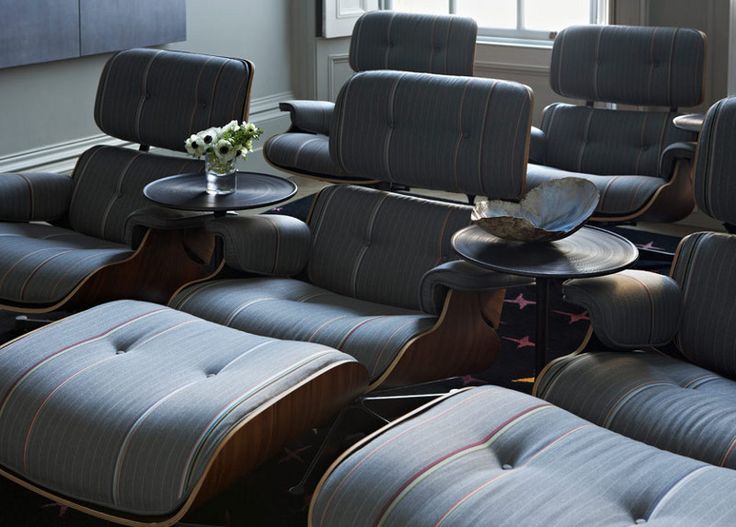
POWER OF THE PINSTRIPE


The allure and sophistication of men's suiting fabric has always fascinated me.  Pinstripe, houndstooth, herringbone, plaid, paisley, glen check, gingham, tartan... they're all fabulous patterns and look great on a classy guy sporting them, but my all time favourite is the pinstripe.  Pinstripes are usually synonymous with conservative menswear; politicians, bankers, business executives - they all wear them to appear serious, trustworthy and knowledgeable.  To their advantage, pinstripes are also very classy and sexy...certainly promoting the swagger effect...me... love!  Nothing sexier than a man in a pinstripe suit.

Pinstripe is a classic pattern, functional in fashion as in interior design.  It's a guaranteed unisex décor pleaser.  In home décor it has an elegant masculine effect that looks clean, crisp and ever so sophisticated.  Pinstripes are discreet and minimalist and are easy to match with any type of décor, either as focus or as accent.  They can provide movement and visual interest in any room. 

Pinstripes are by no means a new notion, but without fail, a trend just waiting for a big revival. Menswear patterns are classics that are meant to stand the test of time, so why not decorate with them too?


Masculine sophistication meets feminine glamour - a powerful union.


xo,
Emi